Real networks. Real numbers.
Mid-market shippers running Routevein across grocery distribution, building materials, and food & beverage freight. Shipper names withheld — freight operators routinely require NDA on competitive routing data. The stop volumes, freight spend figures, and KPI results shown here are drawn from actual pilot engagements.
Case Study 01 · Grocery Distribution · Midwest
Regional grocery distributor cuts deadhead from 31% to 14% in 60 days.
Shipper Profile
Annual freight spend $85M. Private fleet of 38 trucks operating across 6 Midwest states. ~600 weekly stops. Running MercuryGate TMS with manual route planning overlays.
Challenge
Dispatchers were planning morning routes manually with a combination of MercuryGate's built-in routing (not a true VRP solver) and Excel adjustments. Deadhead averaged 31% — trucks running empty after drops with no backhaul coordination. New Walmart DC openings had changed lane patterns faster than dispatchers could adapt.
Routevein Implementation
Routevein connected to MercuryGate via EDI 204/990. The solver ran against historical 8-week stop data in the pilot, then went live with daily route generation. Multi-depot configuration handled the distributor's 2 Chicago-area cross-docks and 1 Wisconsin facility.

Case Study 02 · Building Materials · 14-State Network
Building products manufacturer solves multi-depot VRP across 14 states.
Shipper Profile
Annual freight spend ~$130M. 3 distribution centers (Chicago, Columbus, Nashville). Mixed FTL/LTL, private fleet + contract carriers. ~900 weekly stops across Midwest, Southeast, and Mid-Atlantic.
Challenge
Multi-depot routing was impossible with their incumbent TMS routing module. Dispatchers at each DC planned independently — no cross-depot optimization. A stop in Cincinnati might be served from Chicago when Columbus was closer and had available capacity. Estimated annual overspend: $2.1M in suboptimal lane assignments.
Routevein Implementation
Routevein's multi-depot VRPTW solver now evaluates all 3 depot options for every stop simultaneously. Vehicle assignment is optimized across the entire network in one solve pass. Oracle OTM integration via native API handles load tender synchronization.
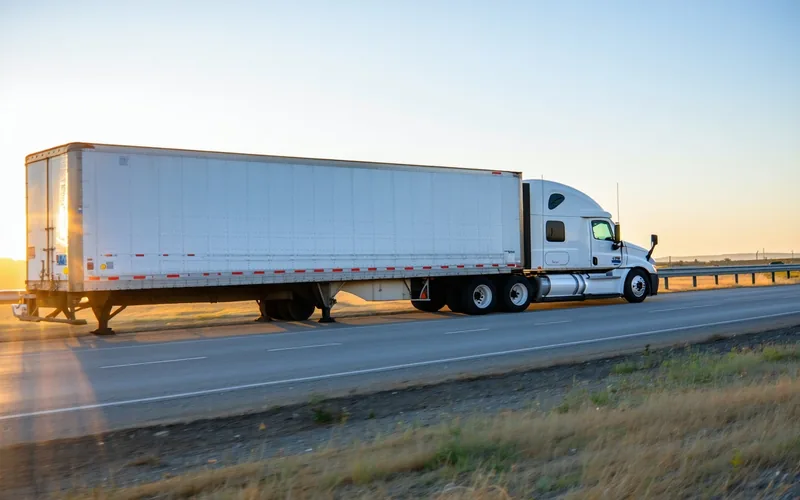
Case Study 03 · Food & Beverage · Co-Packer
Food & beverage co-packer eliminates HOS violations and cuts LTL waste.
Shipper Profile
Annual freight spend $60M. Mixed private fleet and 3PL. 420 weekly stops. Temperature-controlled LTL and FTL. Running McLeod Software TMS. Challenging time windows due to retail DC delivery appointment requirements.
Challenge
Two compounding problems: (1) HOS compliance was managed post-route as a dispatcher gut-check, leading to 3-4 log violations per quarter. (2) LTL vs FTL decisions were made manually per shipment — they were routinely shipping 8-pallet loads as FTL because no one was consolidating.
Routevein Implementation
HOS rules are now hard constraints in the solver. No route is generated that would put a driver out of compliance. LTL consolidation engine reduced per-shipment cost by automatically grouping co-packable LTL lanes.
Temperature-controlled
LTL + FTL optimization
What operations teams say.
We cut deadhead from 31% to 14% in the first 60 days. The EDI 204 integration dropped our tender cycle from 4 hours to 20 minutes. Our dispatchers stopped dreading Monday mornings.
Sarah K.
Director of Transportation — Regional grocery distributor
Multi-depot VRP was the piece our old TMS couldn't handle. We run 14 states, 3 depots, and mixed FTL/LTL. Routevein modeled our actual network in the pilot week — not a generic demo.
James W.
VP Supply Chain — Building products manufacturer
HOS compliance used to be a dispatcher gut-check. Now it's a hard constraint in the solver. We haven't had a driver log-book violation since go-live. That alone paid for the subscription.
Diana R.
Fleet Operations Manager — Food & beverage co-packer
What would these numbers look like for your freight?
We'll run your actual dispatch history through the solver and return a deadhead reduction estimate, cost-per-mile projection, and HOS compliance gap report. We're an optimization tool — we don't broker freight, replace your carriers, or touch your carrier contracts. The savings come from running the same carriers on better routes.